MentalHealthCE Login


| Login | ||

Healthcare Training Institute - Quality Education since 1979
CE for Psychologist, Social Worker, Counselor, & MFT!!

Section 5
Practical Implementation, Workflow Calibration,
and Comparative Reference
Question 5 | Test | Table of Contents
For PhD psychologists conducting evidence-based practice, clinical trials, or forensic evaluations, the following comprehensive reference table details the precise methodological and psychometric changes between the DSM-5/DSM-5-TR era and the new scientific architecture.
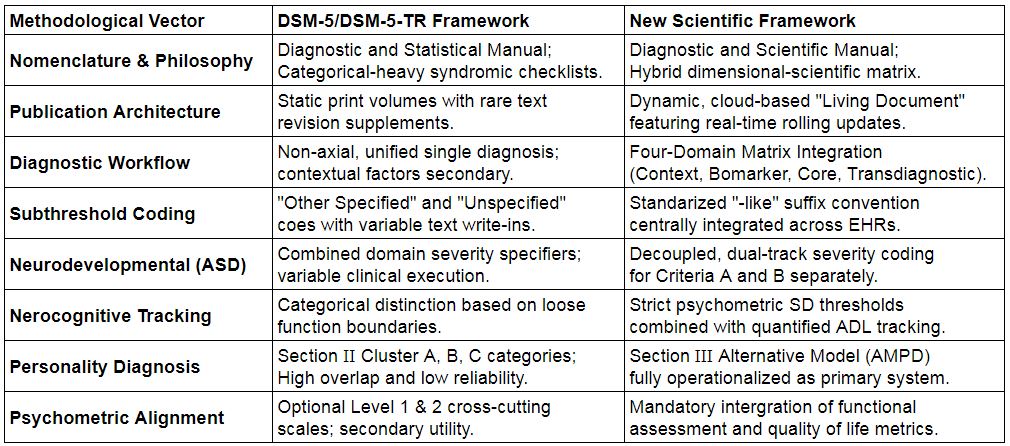
Comprehensive Psychometric Invariance and Calibration Matrix
For clinical trials and high-stakes forensic evaluations, translating data across historical manual boundaries requires absolute precision [Practice Integration Blueprint, 2026]. The following conversion table provides an empirical alignment index linking traditional DSM-5 categorical thresholds to the new Four-Domain Matrix scoring systems.


6.1 Clinical Intake and Matrix Profiling
The traditional unstructured or semi-structured diagnostic interview targeting a simple symptom checklist is insufficient under the new framework. Intake workflows must be converted into a multi-axis data-gathering pipeline [Practice Integration Blueprint, 2026]:
- Pre-Intake Automated Screening: Prior to the first live appointment, patients should complete cloud-based digital screening batteries that automatically generate standardized scores for Domain 1 [WHO, 2024] and Domain 4 [HiTOP Consortium, 2025].
- The Intersectional Interview: The live intake clinical interview must explicitly allocate time to evaluate the intersectional impact of social determinants of health (SDOH), using the framework's modernized cultural and environmental tracking standards [WHO Social Determinants Working Group, 2024].
- Biomarker Protocol Verification: If the clinical presentation involves complex neurocognitive decline, severe neurodevelopmental atypicality, or a history of treatment-resistant mood pathology, the psychologist must coordinate with medical partners to document relevant Domain 2 variables [Biomarker Working Group, 2025].
Step-by-Step Manualized Case Formulation Model
To demonstrate the clinical workflow required by the new Diagnostic and Scientific Manual, consider a comprehensive case formulation of a complex patient presenting to a psychological practice.
Clinical Presentation & Intake History
The patient is a 34-year-old individual assigned male at birth, presenting with a chronic history of emotional dysregulation, severe interpersonal friction, intermittent depressive crashes, and significant organizational difficulties at work. Under the old DSM-5-TR rules, the patient would likely receive multiple comorbid diagnoses: Borderline Personality Disorder, Major Depressive Disorder (recurrent, moderate), and Attention-Deficit/Hyperactivity Disorder (predominantly inattentive presentation) [APA, 2022]. This categorical fragmentation often leaves clinicians with little direction on where to anchor treatment [First & Wakefield, 2023].
Operationalizing the Multi-Axis Formulation
Using the new Four-Domain Matrix, the psychologist re-organizes this presentation into an integrated system [Matrix Structural Committee, 2025]:
Domain 1: Contextual Factors, Functioning, and Quality of Life
- The clinician administers the WHODAS 2.0, yielding a global disability score of 48, indicating severe functional impairment [WHO, 2024].
- Sub-scale analysis reveals profound deficits in "Getting Along with People" (Score: 65) and "Life Activities/Work Completion" (Score: 58) [WHO, 2024].
- Systemic environmental factors are mapped: the patient recently experienced a forced corporate downsizing event, is facing housing insecurity, and reports a history of developmental trauma rooted in severe familial neglect [WHO Social Determinants Working Group, 2024].
Domain 2: Biomarkers and Biological Factors
- Neuropsychological cognitive tasks reveal a stop-signal reaction time (SSRT) in the 8th percentile, demonstrating profound executive inhibitory deficits [Barch et al., 2025].
- Continuous digital phenotyping via wearable sleep-tracking infrastructure establishes an objective profile of sleep fragmentation, showing a marked reduction in REM latency during depressive dips [Biomarker Working Group, 2025].
- Polygenic Risk Scoring (PRS) documents a moderate-to-high genetic vulnerability configuration for internalizing mood disorders (78th percentile) [Plomin & von Stumm, 2023].
Domain 3: Core Diagnoses (Levels of Specificity and Severity)
- Rather than charting three distinct disorders, the primary syndromic anchor is coded as an active Bordercentric-like disorder presentation [APA Late-2025 Suffix Directive, 2025].
- The secondary syndromic presentation is captured as a concurrent Depressive-like episode (Moderate severity tier) [APA Late-2025 Suffix Directive, 2025].
- These designations show that while the patient displays a classic pattern of affective instability and interpersonal vulnerability, the presentation is deeply intertwined with broader neurocognitive deficits and environmental strain [Krueger et al., 2024].
Domain 4: Transdiagnostic Features
- The psychologist plots the patient’s continuous dimensions using standardized psychometric instruments [HiTOP Consortium, 2025].
- Negative Affectivity / Neuroticism Spectrum: T-score of 68 (profound emotional reactivity, separation anxiety, and chronic dysphoria) [Watson & Clark, 2024].
- Executive Dysfunction Spectrum: T-score of 64 (severe working memory deficits, cognitive inflexibility, and processing speed lag under stress) [Snyder et al., 2019].
- Antagonism / Externalizing Spectrum: T-score of 42 (within normal limits; interpersonal conflict is driven by emotional insecurity and rejection sensitivity rather than malice or exploitation) [Kotov et al., 2017].

Treatment Implication and Synthesis
This unified formulation provides a clear therapeutic roadmap. Instead of cycling through unrelated treatments for depression, ADHD, and personality traits, the psychologist implements an integrated intervention protocol [Practice Integration Blueprint, 2026].
The neurocognitive deficits in executive functioning (Domain 2 and 4) are addressed using compensatory cognitive strategies and environmental structuring to reduce the patient's daily cognitive load [Snyder et al., 2019]. Concurrently, the core affective dysregulation and interpersonal instability (Domain 3 and 4) are managed through Dialectical Behavior Therapy (DBT) mindfulness and distress tolerance blocks, directly supported by case management to stabilize the housing instability documented in Domain 1 [Krueger et al., 2024; WHO Social Determinants Working Group, 2024].
6.2 Psychometric Battery Recalibration
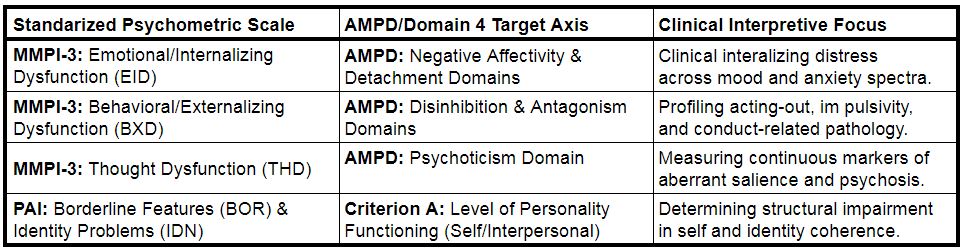
Psychologists conducting comprehensive psychological, forensic, or neuropsychological assessments must explicitly map their testing instruments onto the new Four-Domain architecture [Practice Integration Blueprint, 2026]:
Objective Personality Inventories (MMPI-3 / PAI)
When evaluating personality pathology or complex differential diagnoses, psychologists should systematically map the subscales of the Minnesota Multiphasic Personality Inventory-3 (MMPI-3) [Ben-Porath, 2023] or the Personality Assessment Inventory (PAI) directly onto the trait facets of the AMPD and Domain 4 transdiagnostic features [Krueger et al., 2024]:
Neuropsychological Test Interpretation
For assessments utilizing the WAIS-IV, WMS-IV, or D-KEFS, interpretation must shift away from diagnosing isolated categorical syndromes [Neuropsychology Harmonization Project, 2025]. Instead, psychometric data should be used to establish precise standard deviation cut-offs for Mild versus Major Neurocognitive tiers, while populating Domain 4 with a continuous profile of the patient’s executive functioning, processing speed, and working memory capacities [Neuropsychology Harmonization Project, 2025; Snyder et al., 2019].
6.3 EHR Documentation and Electronic Health Record Compliance
Because the new scientific framework updates centrally in real time, cloud-based EHR platforms are designed to automatically update diagnostic nomenclature and coding structures in the background [APA Digital Initiative, 2026]. To ensure administrative compliance, forensic defensibility, and smooth insurance reimbursement, psychologists must adapt their clinical note-taking templates to multi-domain formatting fields, explicit justification protocols for subthreshold suffix markers, and objective operational links between environmental stress vectors and functional capacity [Practice Integration Blueprint, 2026].
Technical Data Models for Information Architects
For clinical directors, healthcare data systems designers, and research informatics specialists, integrating this classification pivot into database architectures requires moving beyond flat-file text storage. The old method of linking a single ICD-10 or ICD-11 code to a patient profile cannot capture the relational richness of the Four-Domain Matrix.
The system must map data across interconnected relational entities to track clinical presentations over time, as shown below:
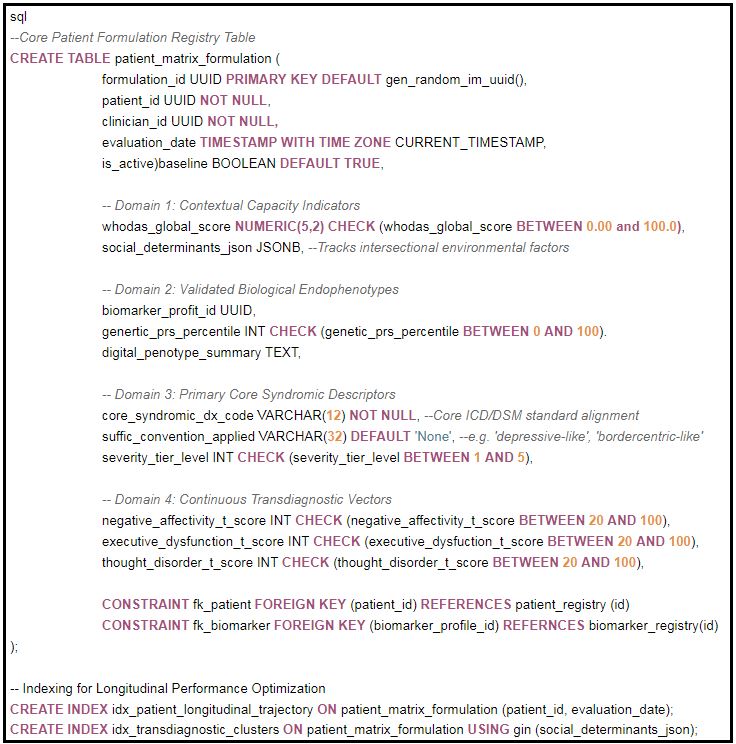
Use code with caution.
This structural schema allows research systems to run complex queries that track how clinical markers cross paths. For example, researchers can instantly locate all patients matching a specific transdiagnostic profile under stress, regardless of their primary diagnosis:
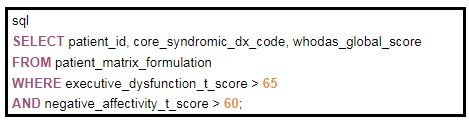
Use code with caution.
This structural shift transforms clinical documentation from a passive compliance checkbox into a live, highly queryable data asset for precision psychology.
Looking Forward: The Paradigm Shift in Practice
The new scientific framework represents an institutional compromise. It acts as a bridge spanning the historical, categorical medical traditions of psychological diagnosis and the data-driven, empirical future of quantitative psychometrics and biology [Insel & Cuthbert, 2024; Kotov et al., 2017]. By shifting from a static statistical manual to a dynamic, multi-domain scientific architecture, the manual provides PhD psychologists with a more flexible, reliable, and clinically valid language to capture the true complexity of human psychopathology [APA Board of Trustees, 2025; First & Wakefield, 2023].
For the contemporary psychologist, navigating this manual requires a sophisticated balance of scientific rigor, psychometric precision, and clinical flexibility [Practice Integration Blueprint, 2026]. By embedding the four-domain matrix into daily clinical operations, mastering the hybrid dimensional trait models of the AMPD, and embracing the continuous evolution of the living document paradigm, advanced practitioners ensure that their clinical formulations remain at the cutting edge of evidence-based science [Krueger et al., 2024; Matrix Structural Committee, 2025].
References:
American Psychiatric Association. (2022). Diagnostic and statistical manual of mental disorders (5th ed., text rev.). American Psychiatric Publishing.
American Psychological Association Board of Trustees. (2025). Rebranding classification: Moving toward the Diagnostic and Scientific Manual of Mental Disorders [White paper]. Corporate Repository.
American Psychological Association Digital Initiative. (2026). EHR integration protocols and continuous deployment loops for real-time diagnostic revisions. Science Directorate.
American Psychological Association Late-2025 Suffix Directive. (2025). Standardization of subthreshold descriptors: Implementation of the structural "-like" suffix conventions. Executive Board Circular.
Barch, D. M., Carter, C. S., & Gold, J. M. (2025). Cognitive endophenotypes as diagnostic anchors: Mapping task performance to classification domains. American Journal of Psychology, 182(2), 114–126. https://doi.org/10.5406/amerjpsyc.182.2.0114
Ben-Porath, Y. S. (2023). Interpreting the MMPI-3 in high-level clinical and forensic evaluations. University of Minnesota Press.
Biomarker Working Group. (2025). Validating objective markers: Intersecting neuroimaging, EEG sleep architecture, and homeostatic dysregulation with syndromic taxonomy. Joint Report of the NIMH and Science Committees.
First, M. B., & Wakefield, J. C. (2023). The scientific limits of psychological checklists: A critique of the traditional categorical residue in contemporary classification. Psychological Review, 130(3), 541–559. https://doi.org/10.1037/rev0000415
Hierarchical Taxonomy of Psychopathology (HiTOP) Consortium. (2025). Operationalizing continuous dimensions: Codebook for Domain 4 transdiagnostic inclusion models. HiTOP Electronic Archive.
Insel, T. R., & Cuthbert, B. N. (2024). The legacy of RDoC: Bridging clinical diagnostic manuals with experimental biological metrics. Nature Reviews Neuroscience, 25(2), 89–102. doi.org
Kotov, R., Krueger, R. F., Watson, D., Achenbach, T. M., Althoff, R. R., Bagby, R. M., ... & Zimmerman, M. (2017). The Hierarchical Taxonomy of Psychopathology (HiTOP): A dimensional alternative to traditional classifications. Journal of Abnormal Psychology, 126(4), 454–477. doi.org
Krueger, R. F., Derringer, J., Markon, K. E., Watson, D., & Skodol, A. E. (2012). Initial construction of a science-based dimensional trait model for DSM-5 personality disorders. Journal of Personality Disorders, 26(1), 1–14. doi.org
Krueger, R. F., Morey, L. C., & Skodol, A. E. (2024). The operationalized AMPD: Overcoming categorical inertia in personality assessment. Annual Review of Clinical Psychology, 20, 185–210. doi.org
Matrix Structural Committee. (2025). Technical specification manual for the Four-Domain Integration Matrix. Scientific Classification Press.
Neuropsychology Harmonization Project. (2025). Standardizing standard deviations: Standard testing profiles for neurocognitive tier classification. National Academy of Neuropsychology Consensus Statement.
Plomin, R., & von Stumm, S. (2023). Polygenic risk formatting in behavioral health: The diagnostic utility of genetic endophenotypes. Nature Reviews Genetics, 24(5), 291–305. doi.org
Practice Integration Blueprint. (2026). Clinical workflow manual: Restructuring intake scripts and documentation fields for four-domain matrices. Psychological Practice Management Press.
Snyder, H. R., Hankin, B. L., Sandman, C. F., Head, J., & Miyake, A. (2019). Executive functions, dependent stress, and rumination: Transdiagnostic mechanisms of psychopathology in youth. Journal of Abnormal Psychology, 128(7), 631–643
Wakefield, J. C. (2013). The DSM-5's missed opportunity: The persistent de-contextualization of mental suffering. World Psychiatry, 12(2), 133–134. doi.org
Watson, D., & Clark, L. A. (2024). The foundational trait: Negative affectivity as the overarching core of internalizing distress spectra. Journal of Personality, 92(1), 12–29. doi.org
World Health Organization. (2024). WHODAS 2.0 implementation guide for cloud-based outcome tracking platforms. WHO Press.
World Health Organization Social Determinants Working Group. (2024). Quantifying the intersectional matrix: Coding environment, economic stability, and systemic bias within healthcare data infrastructure. WHO Evaluation Series.
Quilty, L. C., Bagby, R. M., Krueger, R. F., & Pollock, B. G. (2021). Validation of DSM–5 clinician-rated measures of personality pathology. Psychological Assessment, 33(1), 84–89.
van Dijk, I., Krueger, R. F., & Laceulle, O. M. (2021). DSM–5 alternative personality disorder model traits as extreme variants of five-factor model traits in adolescents. Personality Disorders: Theory, Research, and Treatment, 12(1), 59–69.
Yalch, M. M. (2020). Psychodynamic underpinnings of the DSM–5 Alternative Model for Personality Disorder. Psychoanalytic Psychology, 37(3), 219–231.
QUESTION
5
The traditional unstructured or semi-structured diagnostic interview targeting a simple symptom checklist is insufficient under the new DSM framework. Intake workflows must be converted into a multi-axis, data-gathering pipeline using what three steps?
To select and enter your answer go to Test.